



Sunny Days Blog
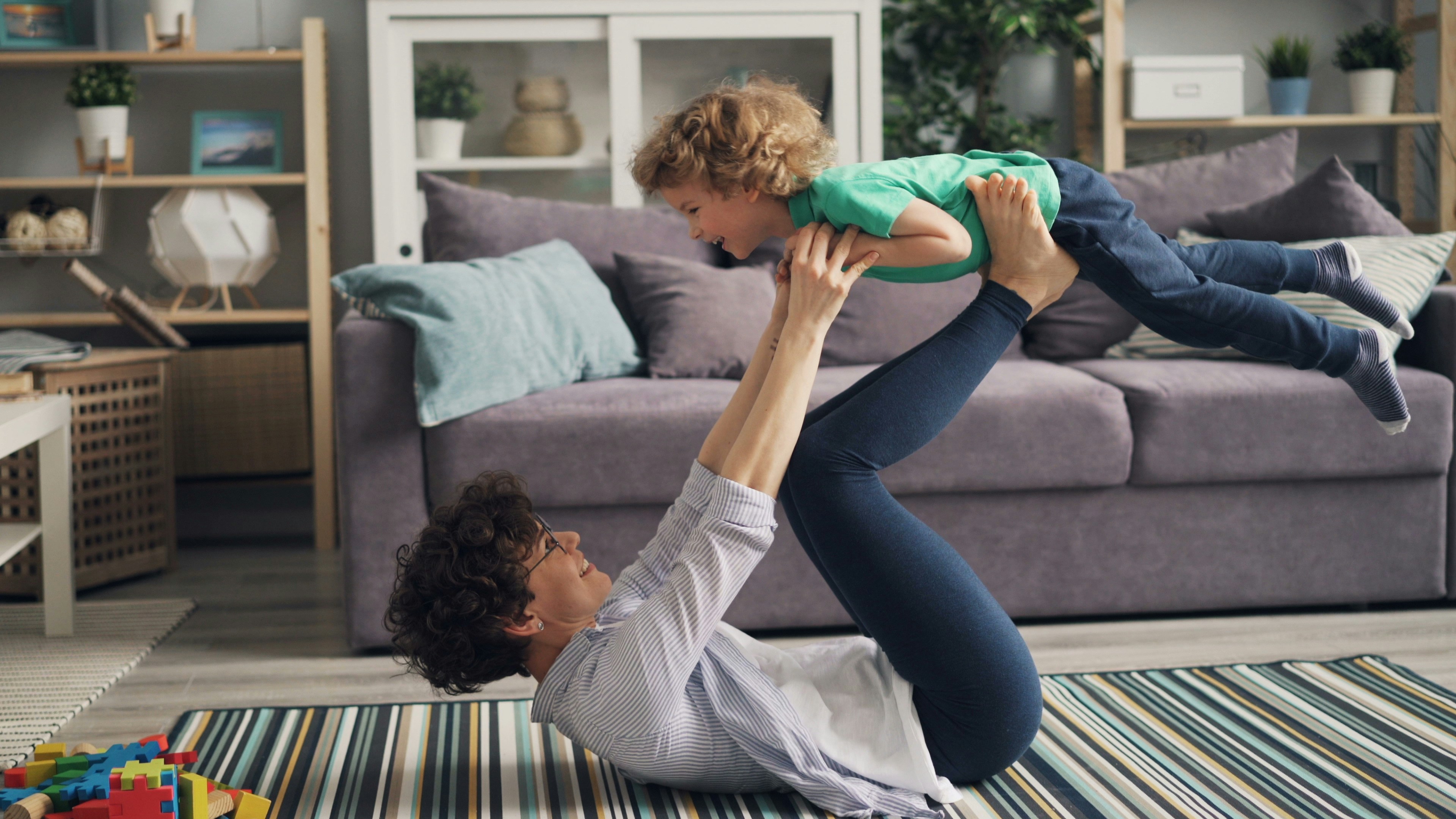
As professional practitioners and therapists, we understand the importance of establishing and maintaining positive relationships with infants, toddlers, and their respective families. We do this through pairing, which helps us keep early intervention and ABA therapy sessions fun and educational for young children.
In this blog post, we explore what pairing is, how to utilize pairing to help young children learn, and the neurology behind pairing.
What is Pairing?
The term “pairing” refers to the process of becoming a friendly and preferred presence for an infant or toddler.
As therapists, we bond with young children by consistently pairing ourselves with fun activities, favorite toys/items, or praise, so that the child begins to associate us and the parents/caregivers we are coaching with happiness, safety, and desired scenarios.
Initially, we give very few demands or directions to ensure that the child is not taken out of their comfort zone. We want to make certain the therapist is not associated with challenging situations that require high effort from the child. The therapist strives to be
seen as a signal for fun and desired interactions.
Many early intervention practitioners were taught that pairing and bonding with children happens before working on targeted development skills. If we look more closely, we see that pairing occurs all the time, and that it does far more than help us start on the right foot.
How to Utilize Pairing in a Therapeutic Setting
If we consistently create favorable experiences for the children and families we work with, we will be seen as “The Purveyor of Great Things!” We will be a signal that great times are coming, and who doesn’t want that?
It is simple enough to envision the initial steps of the process: provide free access to fun activities and experiences while avoiding taxing the child with any demands. Eventually, we want the child to engage in adult-directed activities because we can teach targeted skills with greater efficacy, and we want to establish participation in adult-directed activities as a rewarding experience.
So, how do we teach new skills and support development while continuing to be seen as the purveyor of great things? We do this by knowing the abilities, strengths, and challenges for the infants and toddlers we work with.
We start by introducing very simple demands that are easy for the child to perform, and easy for the therapist, parent, or caregiver to assist with if the child needs help. We want these initial demands to be seen as non-intrusive by the child.
Pairing Activities
When considering responses to target in you ABA or early intervention sessions, it is best to start with a simple demand that the child can accomplish quickly and easily, even if prompting or assistance is needed.
For example, asking for a high five that briefly interrupts a play activity is a great first step. It doesn’t seem like a demand, and it is something that can be performed or prompted quickly. After the high five, be certain to provide enthusiastic and meaningful praise and allow the child to return to the preferred activity and follow his or her lead.
Once your simple demand (the high five, in this case) can happen independently and is easily tolerated, it is time to add some more adult directions into the mix. Some examples are:
-
demonstrating a simple action for the child to perform with a preferred toy and prompt him or her to imitate
-
asking the child to put one toy into a container
-
pausing the activity to have the child jump up and down
-
having the child imitate an action before returning to the preferred activity
If we move at the right pace, we are gently and gradually shaping the child’s ability to follow adult direction and put forth a little more effortful responding while still sending signals that good times are still coming.
If we look closely, we can see a slight change in the dynamic interactions among the child and therapist or caregiver. Now, the child understands that “good times are coming” if he or she responds to their parent or therapist in a particular way. The child begins to learn that they are expected to respond in a certain way to obtain desired outcomes. Because of this, the value of attending to others, engaging with others, and demonstrating the skill is much greater than it had been.
The Neurology of Pairing
If we continue to effectively pair positive experiences with toddlers and gradually shape their skills and behaviors, we have happy, relaxed, and motivated learners! When children are happy and relaxed, they are processing information using the prefrontal cortex of their brains. This is when and where optimal learning occurs.
If we fail to effectively pair learning and social experiences with positive outcomes for children, or even worse, if we pair them with undesired scenarios children will not be motivated to engage. Rather, they will be motivated to escape from undesired scenarios to remain comfortable.
In this instance, a child is more likely to exhibit a fight or flight response, which is controlled by the amygdala in the brain. When this occurs, the value of behavior associated with engagement will be at an all time low and will make learning difficult, as the child is seeking safety.
While it may seem like a simple concept at first, the importance of ongoing pairing with children and their families in early intervention cannot be overstated. It serves as the foundation for trusting relationships that makes learning from others possible and desirable. When children feel safe, connected, and understood, they become more comfortable and motivated to engage, explore, and participate in experiences that will help facilitate their development and better connect with others.
For all our Sunny Days practitioners, Scott Rieger offers online trainings on early childhood skill assessment and more. We hope you join us for a future webinar!
The following References were used to develop this article:
- Barbera, M.L. (2018). Pairing: the key to turning things around for kids with autism. https://www.marybarbera.com/pairing-key-turning-things-around-kids-autism/
- Barnett, E. (2020, Feb. 6). Pairing: the foundation of ABA therapy. https://www.attentivebehavior.com/pairing/
- Hanley, G. (2020). A Perspective on Today’s ABA from Dr. Hanley. https://practicalfunctionalassessment.com/2021/09/09/a-perspective-on-todays-aba-by-dr-greg-hanley/
- Kelly, A. et.al. (2015). Effects of pre-session pairing on the challenging behavior and academic responding of children with autism. Behavioral Interventions, 30(2); 135-156
- Kolb, R. (2017). Pairing: building relationships before placing demands. http://www.autismsociety-nc.org/pairing/
- Moriguchi Y, Hiraki K. Prefrontal cortex and executive function in young children: a review of NIRS studies. Front Hum Neurosci. 2013 Dec 17;7:867. doi: 10.3389/fnhum.2013.00867. PMID: 24381551; PMCID: PMC3865781.